






 |
||||||||
|


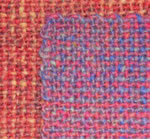 Noro Kureyon |
Plain weave (tabby) is not as boring as the name sounds. With an interesting yarn, embellishment, or joining technique, it’s usually enough for me. Plain weave means that all of the threads alternate over and under. It’s simple, therefore a perfect showcase for color, unusual yarns, or embellishment.
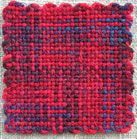
The most obvious way to add interest to plain weave is with a yarn that has dyed or spun color variations. Some that leap to mind are Noro Kureyon and Silk Garden, Southwest Trading Company Karaoke, Reynolds Odyssey — but there are unlimited numbers of beautifully and imaginatively colored commercial yarns. I love to showcase my own hand spun and hand dyed yarn this way, too. |

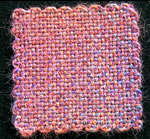
Depending on the length of color repeat and where you start in the repeat, the woven result might be tweedy, plaid, checked, or subtly shaded from corner to corner. If the yarn is dyed to have an exact repeat, you can weave the exact same plaid over and over, then join the modules to make an overall plaid in the finished piece.
 |
 |
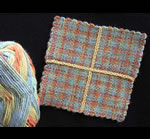 |
Color variation in plain weave
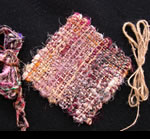 Fragile, bulky handspun silk for three layers. Final layer woven with fine, smooth handspun silk. |
Jazz up plain weave with texture. Chenille and nubby seed yarns usually don’t need special treatment Fragile yarns that cannot be needled through the last layer—like long eyelash and fur—can often be used in the first two or three layers, with a smooth, blending thread for the remainder of the weaving. |
| You don’t have to weave a unit with one weight of yarn. If you want to use a yarn that’s too heavy for all four layers, use the heavy yarn for the first two layers and a much finer yarn for the final wrap and needle-weaving. | 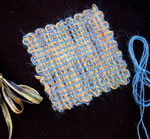 Bulky cotton/nylon ribbon & lace weight 2-ply alpaca |
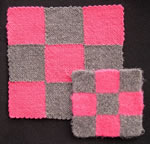 Before and After Felting |
Change the texture of plain weave with felting! I love this process and use it often. Sample first to get the finished felted size of the modules before you plan the project. This type of weaving will felt at the same rate both horizontally and vertically. You can seam before or after processing for completely different effects. |
| Add an unexpected dimension to plain weave by using a stiffener on the finished piece. I always use a spray-on stiffener for bookmarks. And I’ve seen it used when turning yarn weaving into jewelry. More possibilities here!
Add beads to plain weave by threading them onto the yarn first and placing them in the first three layers, either “all over” or in a motif. Needle-weave the last layer, securing each bead into its final resting place, as you go. Plain weave in a plain yarn can be a canvas for embellishment after weaving is completed. You might want to add cross stitch or silk ribbon embroidery. I found a book on Danish pulled thread embroidery that’s loaded with possibilities. How about rubber stamping? Stencilling? If the stitchery or paint is added before removing weaving from the loom, you have a perfect tensioning “hoop” already in place. |
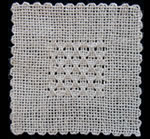 Danish pulled thread embroidery |
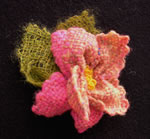 Wool and mohair Loom Bloom |
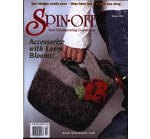
The shape of a plain weave piece can be manipulated by pulling selected threads in the warp and weft. The Loom Bloom project was featured in the 2005 winter issue of Spin-Off magazine (no longer available). |
 |

| 2" square Weave-It or Weavette |
2 yards |
|
| 4" square Weave-It or Weavette or Loomette |
7.5 yards | |
| 4.25" square—Bucilla Magic-Loom |
8.25 yds | |
| 2" X 4" Weavette rectangle | 4 yards | |
| 2" X 6" Weavette rectangle |
6 yards | |
| 4" X 6" rectangle Weavette | 11 yards | |
| 6" X 6" square Weavette | 16.25 yds | |
| 5" X 5" Weave-It Rug Loom | 5 yds, 30 inches | |
| 7” square Hazel Rose Loom | 18 yards for bias weave |
Buy extra yarn, to allow for sampling and unforeseen problems, such as knots in skeins and defects in yarn structure.